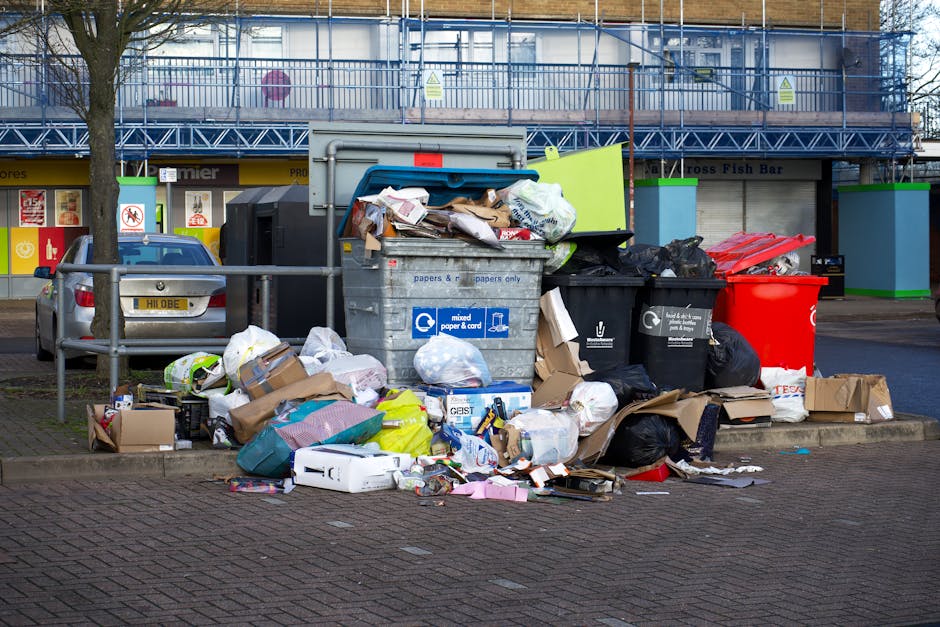
Camden Council permit guide for Hampstead rubbish clearances
If you are planning a rubbish clearance in Hampstead, the permit side of things can feel more confusing than the actual lifting. Do you need a licence? Is the skip on the road? What about a van blocking part of the street for ten minutes while you load heavy furniture? The Camden Council permit guide for Hampstead rubbish clearances is really about making sure the job is done legally, safely, and without a nasty surprise from enforcement or a neighbour who has had enough.
In simple terms, the rules tend to depend on what is being placed on public land, how long it stays there, and whether the work affects traffic, pedestrians, or parking. That sounds dry, but it matters. A lot. One missed permit can turn a straightforward clearance into a delay, an extra cost, or an avoidable headache. This guide breaks it down in plain English so you can plan properly, avoid common mistakes, and choose the right clearance method for your property, your street, and your schedule.
For readers comparing clearance options, you may also find it useful to look at our waste removal service, house clearance, and builders waste clearance pages, especially if your job involves mixed items, renovation debris, or a tight access point.
Table of Contents
- Why Camden Council permit guide for Hampstead rubbish clearances Matters
- How Camden Council permit guide for Hampstead rubbish clearances Works
- Key Benefits and Practical Advantages
- Who This Is For and When It Makes Sense
- Step-by-Step Guidance
- Expert Tips for Better Results
- Common Mistakes to Avoid
- Tools, Resources and Recommendations
- Law, Compliance, Standards, or Best Practice
- Options, Methods, or Comparison Table
- Case Study or Real-World Example
- Practical Checklist
- Conclusion
- Frequently Asked Questions
Why Camden Council permit guide for Hampstead rubbish clearances Matters
Hampstead has a mix of residential roads, narrow streets, period homes, flats, garden access routes, and busy parking patterns. That means rubbish clearances are not just a matter of "turn up and take it away". Sometimes they involve access issues, loading restrictions, or the need to place a container, skip, or vehicle in a public space. If that happens, permits may be required.
Why does this matter so much? Because the cost of getting it wrong is rarely just financial. You can lose time, disrupt neighbours, and end up needing to rearrange tradespeople, removals, or tenants. In our experience, the biggest stress point is usually not the rubbish itself. It is the logistics around it. A clearance that looks easy on paper can become awkward the moment a van has nowhere legal to stop, or a skip is left sitting on the road a day longer than planned.
For homeowners, landlords, agents, and businesses, the permit question is really about risk management. If you understand the basics early, you can choose the right approach and avoid last-minute scrambling. That is especially true in a place like Hampstead, where access can be tight and a small planning mistake can ripple through the whole job.
Expert summary: If any part of a rubbish clearance needs to occupy a public road, pavement, or other controlled space, check permit requirements before the booking is confirmed. It is much easier to plan around the rules than to fix a problem on the day.
How Camden Council permit guide for Hampstead rubbish clearances Works
The core idea is straightforward: private land and public land are treated differently. If all waste is loaded from private property without blocking the highway, permit issues may be minimal. But once a skip, container, or vehicle is placed on a road, footway, or other council-controlled area, you need to think about permission, conditions, and timing.
There are a few common scenarios:
- Skip or container on the road: This usually triggers permit requirements and may involve strict placement rules.
- Vehicle loading from the street: Short stops can still create issues if parking restrictions apply or if the vehicle obstructs traffic.
- Front garden or driveway clearance: If everything stays on private land, permits may not be needed, but access and safety still matter.
- Mixed-use or communal property: Flats, shared entrances, and managed buildings may need extra coordination, even if council permission is not the main issue.
For many clearances, the practical decision is not "permit or no permit?" but rather "what is the least disruptive way to do this legally?" Sometimes that means a timed van load. Sometimes it means a skip on private land. Sometimes it means a full man-and-van clearance where waste is loaded quickly and removed the same day.
If you are dealing with flats, loft contents, or furniture-heavy jobs, pages like flat clearance, loft clearance, and furniture clearance are useful starting points. They help you think through access, stairways, and the sort of item mix that often changes the permit picture.
Key Benefits and Practical Advantages
Getting the permit side right is not just about compliance. It makes the whole project smoother. A lot smoother, actually.
- Fewer delays: No frantic last-minute rearranging because the vehicle cannot legally stop where you expected.
- Better budgeting: Permit-related costs are easier to plan when you know about them upfront.
- Cleaner communication: Everyone involved, from the clearance team to the building manager, knows the plan.
- Lower neighbour friction: Fewer blocked pavements, less confusion, and less "What on earth is happening outside?"
- Safer loading: Clear positioning reduces the temptation to rush or carry awkward items from unsafe angles.
There is also a commercial upside. If you are a landlord, letting agent, or business owner, a properly planned clearance helps protect your schedule. No one wants a vacant flat sitting half-cleared because the skip or vehicle situation was not sorted. That sort of thing can quietly cost money in lost time, delayed handovers, and extra labour.
One often overlooked benefit is reputational. A tidy, well-managed clearance looks professional. A messy roadside pile-up does not. It is a small detail, but in Hampstead, where streets can be busy and residents notice everything, that detail matters more than people think.
Who This Is For and When It Makes Sense
This guide is useful for anyone arranging rubbish clearance where access, parking, or public-space use could come into play. That includes:
- Homeowners clearing bulky household waste, furniture, or loft contents
- Tenants moving out and trying to avoid leaving a costly mess behind
- Landlords and letting agents organising post-tenancy clearances
- Tradespeople and refurb teams dealing with builders' waste or rip-out material
- Businesses clearing office stock, archive items, or unwanted fixtures
- Flat owners and block managers needing careful access planning
It makes sense whenever the clearance is not a simple "carry it out and gone" job. If the property is on a tight road, the items are heavy, or the amount of waste is larger than a car boot's worth, you should assume planning is needed. To be fair, many people only realise this when they are already looking at a pile of old furniture and a van parked somewhere impossible.
For business-related jobs, you may also want to review business waste removal and office clearance. If the rubbish includes dismantled fittings or site waste, builders waste clearance is often the closer match.
Step-by-Step Guidance
Here is a practical way to plan a Hampstead rubbish clearance without getting lost in the admin.
- Identify the waste type. Separate general rubbish, furniture, garden material, building debris, and anything hazardous. Different waste types can affect how the job is handled.
- Check where loading will happen. Is everything staying on private property, or will a vehicle, skip, or container need to use the road?
- Look at access. Narrow hallways, basement steps, resident-only parking, and controlled bays all change the plan.
- Decide on the removal method. Manual loading, skip hire, or a full clearance service each have different permit considerations.
- Confirm the timing. Some jobs need precise scheduling, especially if parking space is limited or neighbours need notice.
- Ask about permits early. Do not leave this until the day before. That is how simple jobs turn into complicated ones.
- Keep documentation handy. Booking details, building access notes, and waste descriptions can help avoid confusion.
- Leave a small buffer. Even a well-planned job can run ten minutes long because of staircases, lift access, or a stubborn wardrobe that refuses to fit through the door. Happens all the time.
A good clearance plan should feel calm, not chaotic. If the proposal you receive is vague about access, timings, or permit responsibility, ask for clarification before you agree to anything. The best jobs are the ones where the awkward bits are sorted in advance, not improvised on the kerb.
Expert Tips for Better Results
There are a few small habits that make a big difference.
- Measure the bulky items. Sofa, wardrobe, mattress, and appliance sizes matter when halls are narrow or stairwells are tight.
- Photograph the access route. A few quick images can save a long phone call and help avoid misunderstandings.
- Check loading distance. The longer waste has to be carried, the more labour and time the job may need.
- Group items by type. Keep reusable furniture, recyclables, and general waste separated where possible.
- Plan around busy times. Morning school runs, weekend visitors, and afternoon parking pressure can complicate road-based clearances.
One useful habit is to think like the crew will think. Where will they park? Where do the heavy items come out? Is there a turning point for the van? What happens if rain starts halfway through? That last one sounds small, but on a damp London morning it can matter a lot. Wet cardboard, slippery steps, muddy shoes. Not glamorous, but real.
If your clearance includes items that could be reused or broken down, you may find furniture disposal and recycling and sustainability helpful for shaping a more responsible plan. A slightly smarter sort at the start often leads to less waste and less hassle at the end.
Common Mistakes to Avoid
Most problems are preventable. Usually, they come from assumptions.
- Assuming no permit is needed. This is the big one. If a road or pavement is involved, check first.
- Booking before checking access. A clearance team can only work with the space available.
- Underestimating the volume. One garage full of stuff can be far more than people expect. Ask anyone who has opened an old cupboard and found three broken chairs, a printer, and a suitcase from 2009.
- Mixing waste types without telling anyone. Builders' waste, furniture, and general rubbish are not always handled in the same way.
- Leaving permit questions until the day of the job. That is when the stress starts.
- Ignoring neighbours or building rules. Shared entrances and managed blocks often have their own practical expectations, even if they are not written in giant letters.
Another quiet mistake is choosing the cheapest option without checking the full scope. A low headline price is not much help if it does not include access complexity, loading time, or the permit issues your street creates. Cheap can become expensive, very quickly.
Tools, Resources and Recommendations
You do not need a van full of specialist equipment to prepare well. In most cases, a few simple tools are enough.
- Tape measure: Useful for doors, hallways, furniture, and access points.
- Phone camera: Great for sharing photos of the property, parking spot, or waste pile.
- Notepad or checklist: Handy for remembering dates, times, and item categories.
- Basic labels or markers: Good for separating keep, donate, recycle, and remove piles.
- Access notes: Floor number, lift size, door codes, and parking details can save time.
On the planning side, a few service pages can help you decide what kind of clearance you actually need. For example, home clearance is useful for broader household jobs, garage clearance works well for bulky mixed storage, and garden clearance is the better fit for outdoor waste, cuttings, and broken garden items.
If you are comparing payment and booking confidence as well as logistics, you can also review pricing and quotes, payment and security, and insurance and safety. Those pages help you understand how a professional provider approaches the job beyond the visible loading and lifting.
Law, Compliance, Standards, or Best Practice
For rubbish clearances in London, the safest approach is to treat public-space use as a controlled activity. If any part of your clearance relies on placing a skip, vehicle, or container on a public road or pavement, the relevant permission process should be checked before the job goes ahead. Council requirements can change by location and circumstance, so it is best to confirm the exact position for the specific street and property involved.
There is also a wider responsibility around waste handling. Waste should be transferred to authorised facilities, and the person arranging the clearance should be clear about what is being removed. In plain English: do not hand over rubbish to someone who cannot explain where it is going or how it will be handled. That is not being fussy. That is being sensible.
Best practice in the UK clearance sector usually includes:
- clear item descriptions before collection
- safe manual handling and sensible team sizes
- appropriate vehicle positioning
- careful route planning for narrow access
- responsible waste sorting and disposal
For customers, the practical takeaway is simple. Ask direct questions. Who arranges the permit if one is needed? Where will the load be collected from? What happens if access changes on the day? A reputable provider should answer these clearly, without making you feel like you are asking too much. You are not.
Options, Methods, or Comparison Table
Not every Hampstead clearance should be handled the same way. The right choice depends on access, amount of waste, and whether public-space use is involved.
| Method | Best for | Permit risk | Practical note |
|---|---|---|---|
| Man-and-van clearance | Mixed household waste, furniture, quick removals | Lower if loading stays on private land | Flexible and often simplest for narrow streets |
| Skip hire | Larger clear-outs, renovation waste, ongoing loading | Higher if placed on a public road | Needs more planning and placement checks |
| Private-land container | Properties with driveways or forecourts | Usually lower | Good where there is enough room on site |
| Scheduled same-day clearance | Time-sensitive flat, house, or office jobs | Varies by access and stopping point | Useful where speed matters and access is tight |
In many Hampstead streets, the man-and-van model is the most practical because it reduces the need to occupy public space for long. That said, if you have a large renovation pile or a long-term project, a skip can still make sense. The right answer is not always the same. Sometimes it is boringly simple, and that is a good thing.
Case Study or Real-World Example
A typical Hampstead job might involve a two-bedroom flat with a broken wardrobe, an old sofa, several bags of mixed household waste, and a few awkward items stored in the loft. The property is on a busy residential road, with limited parking and a shared entrance. The owner assumes a vehicle can just stop outside for half an hour. It sounds reasonable. It often is not.
In a case like this, the better plan is to check whether the load can be taken from a private forecourt or whether a short loading arrangement is possible without disrupting traffic. If the waste has to move from the street, permit considerations need to be checked first. The actual clearance then becomes the easy part: sort the items, protect the hallway, move in stages, and keep the loading route clear. By mid-morning, the flat feels different. Less heavy. Less cluttered. A bit easier to breathe in, honestly.
What usually makes the difference is not brute force. It is sequence. First access. Then timing. Then loading. Then disposal. When those four things are in the right order, everything else gets calmer.
Practical Checklist
Use this before you book a Hampstead rubbish clearance.
- Confirm the waste type and rough volume
- Check whether any loading will use the road, pavement, or a shared space
- Measure large items and access points
- Note stairs, lifts, codes, and parking limits
- Ask who handles permits if one is needed
- Clarify whether the service includes removal, disposal, and recycling
- Separate items that may be reused, donated, or kept
- Tell the provider about anything unusually heavy or awkward
- Confirm the date, time, and any building restrictions
- Keep a buffer for delays, because they do happen
Quick takeaway: The smoother your access plan, the less likely permits and parking become a problem. A few minutes of preparation can save a lot of faff later.
Get a free quote today and see how much you can save.
Conclusion
The Camden Council permit guide for Hampstead rubbish clearances comes down to one simple idea: know where the waste is going to be loaded from before the booking is fixed. That one decision shapes the rest of the job. It affects cost, timing, access, and how smoothly the clearance team can work.
If you are dealing with a small household job, the permit issue may be minor. If you are clearing a flat, an office, a garage, or renovation waste in a busy street, it becomes much more important. Either way, the best results come from planning early, asking practical questions, and choosing a clearance method that suits the property rather than forcing the property to suit the clearance. That bit is easy to forget, but it saves a lot of bother.
When it is done properly, the whole process feels lighter, quieter, and far less stressful. And that is really what most people want at the end of the day.
Frequently Asked Questions
Do I always need a permit for rubbish clearance in Hampstead?
No, not always. If all waste is removed from private land without using the road or pavement, a permit may not be needed. Once public space is involved, it is worth checking carefully.
What kinds of clearance usually raise permit questions?
Skip hire, roadside loading, and any job where a vehicle or container needs to sit in a controlled or restricted area are the most common examples.
Who is responsible for arranging a permit?
That depends on the arrangement, but it should be agreed before the job starts. Do not assume. Ask directly and get a clear answer.
Is a van stop the same as placing a skip on the road?
No. They are different situations, but both can create issues if parking rules, traffic flow, or public-space restrictions are affected.
Can a clearance be done from a front garden or driveway instead?
Often, yes. If there is enough private space, that can reduce permit concerns and make the job easier overall.
What should I tell the clearance company before booking?
Share the item type, estimated volume, access route, parking situation, floor level, lift availability, and any building rules. The more accurate the picture, the better.
Are permit delays common?
They can be if the paperwork or timing is left too late. That is why early planning matters. A small delay on admin can become a big delay on the day.
What if my road is very narrow?
Then access planning becomes especially important. Narrow roads often push people toward quicker loading methods, smaller vehicles, or private-land loading where possible.
Does a flat clearance need a different approach from a house clearance?
Usually, yes. Flats often involve stairs, shared access, lift restrictions, and tighter loading arrangements. That changes the practical plan even if the waste type is similar.
How do I know if my waste should go into a builders clearance or a general clearance?
If the waste includes rubble, plasterboard, tiles, or mixed renovation debris, builders waste clearance is often the better fit. For mixed household items, a general house or furniture clearance may be more suitable.
What is the safest way to avoid permit problems?
Check access early, confirm where loading will happen, and choose a removal method that keeps public-space use to a minimum where possible.
Can a professional clearance service help with recycling too?
Yes, many clearances are planned with reuse and recycling in mind. If that matters to you, ask about sorting and disposal standards before booking.