House Clearance Hampstead: Recycling and Sustainability
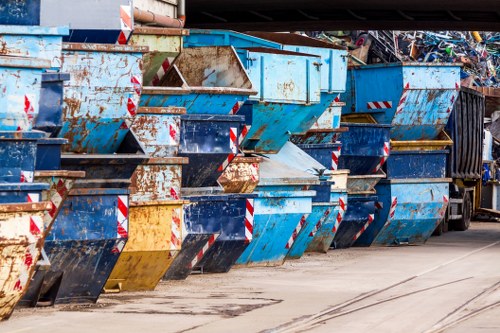
Our Hampstead house clearance service is built around a commitment to an eco-friendly waste disposal area and a practical, community-led approach to creating a sustainable rubbish area. As a specialist in House Clearance Hampstead and nearby neighbourhoods, we focus on minimising landfill through careful sorting, reuse and recovery. Our team follows borough best practice while adding practical steps that maximise items kept in circulation — from furniture and textiles to WEEE and recyclable construction waste.Recycling percentage target and circular goals
We have set a clear recycling percentage target: to reach 80% reuse and recycling for all clearances by 2028. This target covers material reuse, donation, specialist recycling and recovery rather than simple diversion. To achieve this we track outcomes on every job, prioritise donation-ready items and separate materials at source. Achieving an ambitious recycling goal is central to the Hampstead clearance service model and to supporting the boroughs' wider sustainability policies.
Aligning with boroughs' approach to waste separation
Our methods reflect the borough approach to waste separation common across north London boroughs: separate streams for food waste, glass, paper and mixed recycling, and clear procedures for hazardous materials. In practice that means on-site segregation, small-scale sorting at our sustainable rubbish area and careful handover to authorised local facilities. We work with Camden-style kerbside rules and the nearby boroughs' public recycling programmes to ensure items enter the correct recycling stream rather than being downgraded to general waste.Local transfer stations and authorised facilities
We deliver sorted loads to licensed facilities and local transfer stations across north London, working with municipal and private sites in Camden, Barnet and nearby boroughs. Using these authorised hubs ensures material goes to the correct processing stream — from textiles to metals and inert construction waste. Our practice reduces double-handling and ensures accurate reporting against our recycling percentage target by using traceable transfer documentation at each step.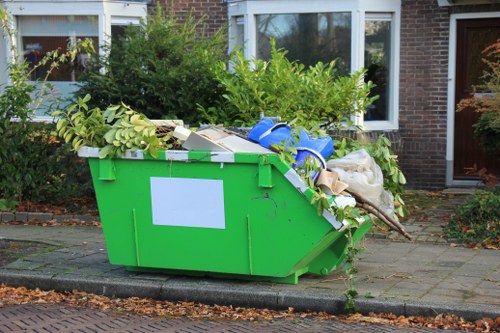
Partnerships with charities and reuse networks
A large part of our sustainable strategy is partnering with local charities and social enterprises. We collaborate with reputable groups and community reuse centres to give items a second life: furniture to furniture-reuse charities, working appliances to electronic reuse programmes, and clothes to local donation centres. These partnerships not only support local causes but also help us meet our strong reuse goals. Donations are handled ethically and recorded to ensure transparency and maximise social value.Our Hampstead clearance network includes relationships with national and local charities, community projects and specialist recyclers. Typical routes include:
- Furniture reuse — donation and resale through partner charities
- WEEE recycling — specialist dismantling and material recovery
- Textile recycling — separation for reuse or fibre recovery
- Construction and green waste — transfer to licensed inert and composting facilities
These streams support a genuine sustainable rubbish area approach that keeps recoverable materials circulating and out of landfill.
Low-carbon vans and fleet decarbonisation
Our clearance fleet is transitioning to low-carbon vans—electric and hybrid vehicles are used where local access, charging and range make them practical. Combined with route optimisation and telematics, this reduces fuel use and emissions per job. We also pilot biofuel blends for larger vehicles and maintain a rolling plan to replace older diesel vans with lower-emission alternatives, aiming to reduce fleet CO2 intensity year-on-year as part of our sustainability commitments.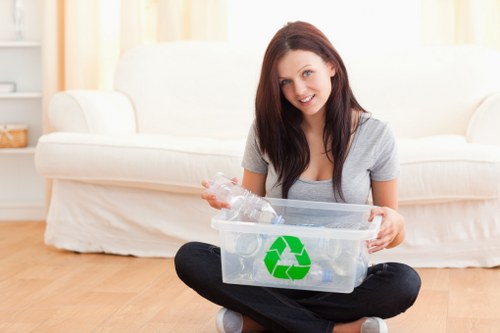
On-site sustainable rubbish area and segregation practice
On larger clearances we create a temporary, clearly signed on-site sustainable rubbish area where materials are separated into reuse, recycle, hazardous and residual streams. This area allows our teams to sort quickly and accurately, and ensures sensitive items (batteries, asbestos suspect materials, solvents) are isolated for specialist handling. We combine manual inspection with practical reuse staging: items in good condition are labelled for donation; salvageable building materials enter a reuse queue; recyclable fractions are packed to minimise contamination.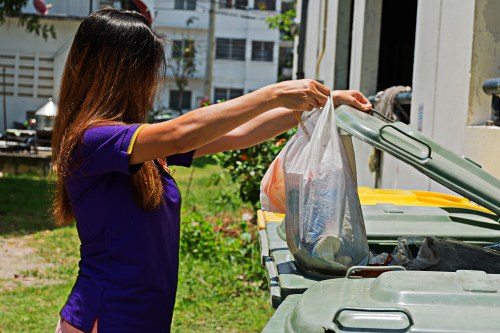
Transparent reporting and continuous improvement
Our Hampstead house clearances include reporting on material flows so clients and stakeholders can see how each job contributes to our recycling percentage target and carbon reduction goals. We review outcomes, refine partnerships and update operational practices to stay aligned with borough waste policies and the latest recycling technologies. By combining community partnerships, authorised transfer stations and a low-carbon fleet, our Hampstead clearance service aims to be a local leader in building a practical, scalable model for eco-friendly waste disposal areas and sustainable rubbish areas.Whether you are arranging a full house clearance or a smaller removal in Hampstead, our approach keeps reuse and recycling at the centre of the process. We balance practical clearance needs with a deep commitment to reducing waste, supporting charities and cutting emissions — making each clearance an opportunity to contribute positively to the local circular economy.