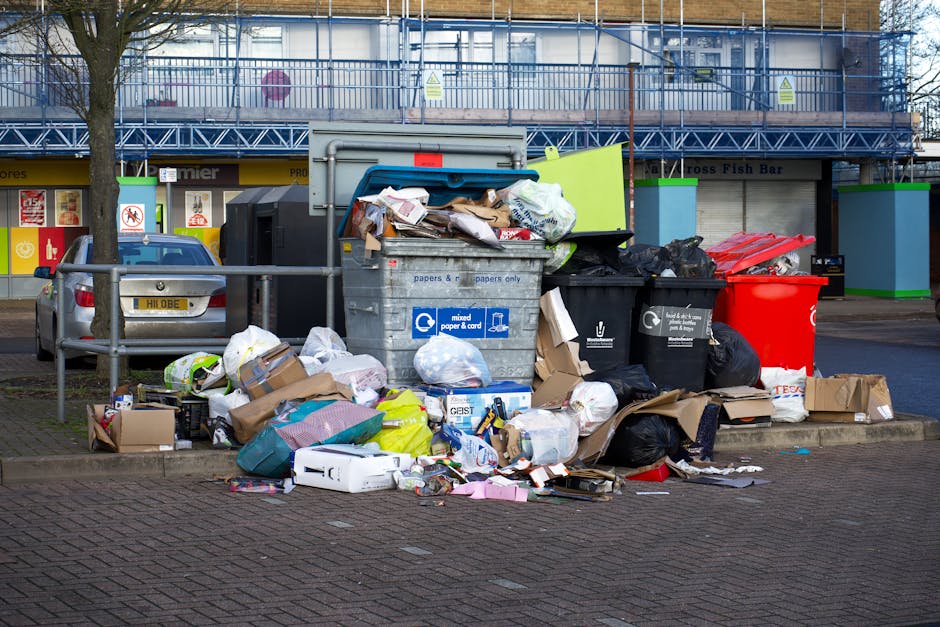
Rosslyn Hill estate rubbish clearance local success story

There's a certain kind of problem that creeps up quietly in estate life: a broken wardrobe waiting in the hallway, bags of mixed rubbish that never quite make it to the bin store, a mattress leaning in the wrong corner, and suddenly the whole place feels tighter, messier, more awkward. The Rosslyn Hill estate rubbish clearance local success story is really about turning that kind of pressure into something manageable again. Not with drama. Just sensible planning, a fast response, and a clean finish that people actually notice.
In a place like Rosslyn Hill, where access can be tight and neighbours are close by, rubbish clearance is never just "take the stuff away". It's about timing, care, respect for shared spaces, and doing the job properly the first time. This article walks through how a local clearance success is typically built, what makes it work, and how residents, landlords, and managing agents can make better decisions when the clutter starts to get out of hand.
We'll cover practical steps, common mistakes, compliance basics, and the sort of small details that save time and hassle. Truth be told, the difference between a stressful clearance and a smooth one is often just good judgement.
- Why the Rosslyn Hill estate rubbish clearance local success story matters
- How it works
- Key benefits and practical advantages
- Who it is for and when it makes sense
- Step-by-step guidance
- Expert tips for better results
- Common mistakes to avoid
- Tools, resources and recommendations
- Law, compliance, standards, or best practice
- Options, methods, or comparison table
- Case study or real-world example
- Practical checklist
- Conclusion
- Frequently asked questions
Why Rosslyn Hill estate rubbish clearance local success story Matters
Estate rubbish clearance matters because clutter spreads. One abandoned sofa becomes a blocked route. A few bags of mixed waste become a complaint. Before long, the shared environment feels less cared for, and that affects everyone using it. In a residential estate, the standard is not just visual tidiness; it is also access, safety, and day-to-day comfort.
Rosslyn Hill has its own local character. The streets and estates around Hampstead tend to combine older buildings, shared access points, and residents who expect things to be handled with minimal disruption. That means a good clearance job has to be quiet, efficient, and thoughtful. No dragging items through communal areas in a way that scrapes walls or annoys the entire building. No half-finished pile left behind because someone underestimated the volume. It sounds obvious, but you'd be surprised how often that happens.
What makes this a success story is not just the removal itself. It is the knock-on effect. Residents feel more comfortable. Access paths are easier to use. Managing agents have fewer complaints to deal with. And the estate can get back to looking like a place people take pride in, rather than somewhere things are merely dumped and forgotten.
Key takeaway: on estates like Rosslyn Hill, rubbish clearance works best when it is planned around the building, not just the rubbish.
How Rosslyn Hill estate rubbish clearance local success story Works
A smooth clearance usually follows a simple but disciplined process. The trick is not speed alone. It's sequencing. First you identify what needs removing, then you decide what can be reused, recycled, or donated, and only then do you schedule the physical collection. That sounds neat on paper. In reality, it takes a bit of judgement.
Most estate clearances begin with a walkthrough or at least a careful description of the items involved. This helps determine whether the job is light domestic waste, bulky furniture, builders' remnants, garden waste, or a full property or communal-area clearance. If the waste is mixed, you may need more sorting time. If access is awkward, you may need extra labour or a smaller vehicle. If the clearance touches shared hallways or stairwells, protection and timing become even more important.
A good local operation normally handles:
- assessment of the waste type and volume
- planning around access, parking, and loading
- safe lifting and removal of bulky items
- separation of recyclable materials where practical
- tidying the area after the clearance
That last part matters more than people think. The best clearances leave the space looking better, not merely empty. You should not feel as if you are still living with the mess in a different form.
If the clearance is linked to a home move, tenancy change, or refurbishment, it often helps to combine it with a broader service such as home clearance or, where the job is smaller and more contained, flat clearance. For awkward items like broken wardrobes, sideboards, or old sofas, a dedicated furniture clearance approach can keep the job cleaner and faster.
Key Benefits and Practical Advantages
The obvious benefit is that the rubbish goes away. But the practical advantages go further than that. Once the clutter is cleared, a space behaves differently. Doors open properly. Staircases feel safer. Fire exits are easier to keep clear. That is not just aesthetic; it is functional.
Here are the benefits people usually feel first:
- Better use of shared space: Corridors, bin stores, and access areas stop feeling cramped.
- Lower stress: A messy estate creates a low-level pressure that people don't always notice until it's gone.
- Faster handover: Useful for tenants, landlords, and agents when a property needs to be ready quickly.
- Cleaner presentation: That matters for resident morale and for anyone visiting the site.
- More efficient recycling: A sorted job is usually a cleaner job, and often a more responsible one too.
There is also a financial angle, though it's worth being sensible about it. A properly planned clearance can reduce repeat visits, wasted labour, and avoidable complications. If the job is assessed accurately the first time, you're less likely to pay for a second round because a cupboard full of broken bits was missed. It happens. More often than it should.
For people comparing options, it can help to look at related services too. If you're dealing with an outside area or overgrown boundary, garden clearance may be the better fit. If the job includes a workshop, storage room, or underground area, garage clearance can be more appropriate. And if your concern is mostly the disposal pathway rather than the physical labour, waste removal gives a broader frame for the task.
Who This Is For and When It Makes Sense
Estate rubbish clearance is not just for people with a dramatic mess on their hands. It makes sense for a fairly wide range of situations. Some are urgent, some are routine, and some are just one of those "we should really deal with this now" moments. You know the type.
This service is especially useful for:
- residents who are clearing out after a move or renovation
- landlords preparing a flat for new occupants
- managing agents dealing with communal waste build-up
- families helping sort an inherited property
- local businesses with overflow waste or furniture disposal needs
- owners with bulky items that are awkward to move alone
It also makes sense where the estate has constraints that make ordinary do-it-yourself disposal tricky. Tight parking. Limited lift access. Shared hallways. Residents who are understandably protective of noise and mess. In those situations, a professional clearance is less about convenience and more about avoiding friction.
One useful rule of thumb: if the waste will take more than one small car load, or if the items are heavy, awkward, or potentially messy, it is probably worth planning a proper clearance rather than improvising. To be fair, improvising with a sofa rarely ends well.
Step-by-Step Guidance
If you want a cleaner result and fewer surprises, follow a simple sequence. It keeps the process grounded and stops the job from spiralling into a half-day of guesswork.
- Identify everything that needs to go. Walk through the flat, hallway, storage space, or communal area and make a clear list.
- Separate items by type. Put furniture, mixed household waste, garden waste, and any specialist items into rough groups.
- Check access and timing. Think about lifts, stairwells, parking, and busy periods in the building.
- Decide what can be reused or recycled. Not everything belongs in the same pile.
- Ask for a clear estimate. Make sure the quote matches the actual size of the job, not a guess based on wishful thinking.
- Prepare the route. Move delicate items out of the way and protect floors or walls if needed.
- Carry out the clearance. The team removes the items, loads them safely, and clears the area.
- Do a final sweep. Check corners, shelves, under benches, and behind doors. Small forgotten bits add up.
That final sweep is especially important in shared buildings. It's where forgotten screws, broken hangers, and random packaging somehow hide. They are sneaky like that.
If there are mixed household items and bulky waste, a broader house clearance can be more practical than trying to deal with each category separately. For commercial overflow, especially from offices or mixed-use buildings, office clearance or business waste removal may be the better route.
Expert Tips for Better Results
The difference between a decent clearance and a genuinely good one often comes down to the little things. Nothing flashy. Just careful choices that save time and reduce friction.
Here are a few practical tips that consistently help:
- Photograph the waste before booking. A few clear pictures make quoting more accurate and reduce misunderstandings.
- Keep recyclables separate where possible. Cardboard, clean metal, and usable furniture are easier to manage when they are not all tangled together.
- Plan around building life. Avoid the busiest times for residents if you can. Early afternoon is often calmer than the school-run rush or late evening.
- Protect the route. Floor corners and narrow door frames are easy to scuff. A bit of preparation saves awkward conversations later.
- Ask about disposal methods. You want a team that takes recycling and responsible sorting seriously, not just one that says the right thing.
If the clearance involves furniture in good condition, it can be worth asking whether it can be separated for reuse. Not every item will qualify, but a few decent pieces can sometimes avoid the skip altogether. That is better for the budget and usually better for the environment too.
Another small but useful point: if the job is on an upper floor, tell the crew in advance. It sounds minor, but it changes the time needed and the number of people required. Hidden stairs have a habit of turning a straightforward clearance into a mini workout. Nobody wants that surprise.
Common Mistakes to Avoid
A lot of clearance problems are not really clearance problems. They are planning problems wearing a rubbish-coloured coat. Here are the mistakes that come up most often.
- Underestimating the volume: A room can look smaller once it fills with broken furniture and bags. Always assume it takes up more space than you think.
- Leaving the sort-out until the last minute: If everything is thrown together, the job becomes slower and less efficient.
- Ignoring access restrictions: Tight entrances, timed parking, or lift limits matter. A lot.
- Choosing on price alone: The cheapest quote is not always the best value if it leads to delays or poor handling.
- Forgetting shared-area etiquette: In an estate, noise, mess, and timing affect other people more than you might expect.
One common trap is assuming a quick "man and van" style collection will always do the job. Sometimes it will. Sometimes it won't. If the clearance is bulky, mixed, or access-sensitive, a more structured approach is usually safer and often smoother.
Another mistake is skipping the cleanup phase. You've removed the obvious mess, great. But if dust, screws, and broken packaging are left behind, the space still feels unfinished. That's the sort of detail people remember. Not in a good way.
Tools, Resources and Recommendations
You do not need a van full of specialist equipment for most estate clearances, but the right tools and a sensible approach make a real difference. The basics are simple, and they matter more than fancy kit.
| Tool or resource | Why it helps | Best use case |
|---|---|---|
| Heavy-duty gloves | Protects hands from sharp edges and grime | Furniture, broken items, mixed waste |
| Blankets or floor protection | Reduces scuffs and marks in shared areas | Stairwells, hallways, narrow routes |
| Sorting bags or crates | Keeps recyclable and general waste separate | Multi-room clearances, mixed loads |
| Clear photos of the waste | Improves quoting accuracy and planning | Any job with bulky or unusual items |
| Service pages and policy information | Helps you check the provider's approach to safety, pricing, and responsibility | Before booking a clearance |
Useful supporting pages on this site include pricing and quotes, recycling and sustainability, and insurance and safety. If you want to understand how the company handles work practices behind the scenes, the about us page and health and safety policy are worth a look too.
For bigger or more structured jobs, it can also help to understand how builders waste clearance differs from standard household removal. Construction debris and mixed renovation waste are handled differently, and pretending otherwise usually causes trouble.
Law, Compliance, Standards, or Best Practice
Waste handling in the UK is not something to treat casually. You do not need to become a legal expert to organise a clearance, but you should expect the provider to work responsibly and sensibly. That means proper handling of waste, attention to safety, and care around where rubbish ends up.
From a best-practice point of view, there are a few points that matter:
- Duty of care: Waste should be transferred and handled in a responsible way. You want to know it is being dealt with properly, not just moved somewhere else and forgotten.
- Safety procedures: Heavy lifting, awkward staircases, sharp materials, and contaminated waste all need proper control.
- Insurance awareness: Accidents are not expected, but they are exactly why insurance and safety matters should be understood before work begins.
- Environmental responsibility: Good practice includes recycling where possible and avoiding needless landfill use.
If a job involves hazardous items, the process becomes more careful. That does not always mean dramatic or complicated, but it does mean you should flag it clearly. Items such as chemicals, certain electronics, or contaminated waste may need specialist handling. The same goes for anything that might be classed as hazardous or awkward to move safely.
For reassurance, it is sensible to review the company's internal guidance on terms and conditions, privacy policy, and payment and security. These pages do not replace common sense, of course, but they do show whether the business is organised and transparent. A clean process usually starts with a clear one.
Options, Methods, or Comparison Table
People often compare estate rubbish clearance with other ways of dealing with unwanted items. Fair enough. The right choice depends on volume, access, timing, and the kind of waste you have.
| Method | Best for | Advantages | Limitations |
|---|---|---|---|
| Professional rubbish clearance | Bulky, mixed, or awkward waste in estates and homes | Fast, flexible, labour included, less hassle | Requires a provider and a clear estimate |
| Skip hire | Longer projects with regular waste generation | Good for ongoing refurbishment work | Space, permit, and loading constraints can be awkward |
| Self-haul to a disposal site | Small, manageable loads | Direct control over timing | Time-consuming, physically demanding, can become messy fast |
| Separate specialist collections | Specific waste streams like furniture or garden waste | Targeted and tidy | May need multiple arrangements if the load is mixed |
In estate settings, professional clearance often wins simply because it solves more than one problem at once. It removes the waste, manages the lifting, and reduces disruption. If the job is mainly about furniture, the targeted furniture disposal route may suit better. If it is linked to a larger move-out or life change, house clearance usually gives a more complete answer.
For commercial spaces or mixed-use blocks, another sensible comparison is whether the job should sit under business waste removal or be split across a few specialist visits. That decision is worth getting right first time.
Case Study or Real-World Example
Here's a realistic example of how a local clearance can go well without becoming a saga. A small estate near Rosslyn Hill needed a communal area cleared after a few weeks of accumulated items: a broken table, several bin-bag bundles, a mattress, packaging, and a couple of damaged chairs left in a storage corner. Nothing dramatic. Just enough to make the area feel cluttered and slightly neglected.
The residents wanted the space cleared quickly, but they also needed minimal disruption because people were coming and going all day. The solution was straightforward: assess the waste first, separate the furniture from the bagged rubbish, arrange a timed collection, and protect the route through the shared corridor. The team arrived with the right labour and cleared the items in one visit. The area was swept afterwards, and the final result looked calm rather than merely emptied.
That kind of outcome seems simple, but it only works when the details are handled properly. The items were listed clearly. Access was checked. The timing respected the building. Nothing fancy. Just competent, local, and calm. That's the heart of a genuine success story, really.
There was also a useful side effect: once the space was clear, residents stopped adding more bits "for later". That happens a lot in shared buildings. Clutter attracts clutter. Once the area looks cared for again, people tend to behave differently around it. Funny how that works.
If the job had involved more structural waste, the team might have needed support from a service like builders waste clearance. If it had included exterior overgrowth or yard debris, garden clearance would have been the better fit. Matching the method to the mess is what keeps the job efficient.
Practical Checklist
Use this checklist before booking or starting a clearance. It keeps things simple, and simple is usually better.
- Walk the area and note every item that needs removing
- Separate furniture, general waste, recyclables, and any special items
- Take photos from different angles for a more accurate quote
- Check access routes, parking, and any building restrictions
- Confirm whether the job needs extra labour or time
- Ask how recycling and disposal will be handled
- Look at the provider's safety and insurance information
- Agree the price basis before the clearance begins
- Make sure the route is protected if needed
- Do a final sweep after removal
If you are still deciding which service fits best, it can help to compare related needs. A small storage clean-out may call for loft clearance. A cluttered utility or back area might lean toward garage clearance. A workplace situation may be better served by office clearance. Matching the service to the space is half the battle.
Get a free quote today and see how much you can save.
Conclusion
The Rosslyn Hill estate rubbish clearance local success story is really a story about doing a practical job well. It's about clearing space without creating new problems, respecting neighbours, keeping things safe, and leaving the area better than you found it. Nothing flashy. Just solid local service and sensible decisions.
If you are facing a cluttered flat, a blocked communal area, or a bulky waste situation that has started to feel bigger than it should, the next sensible step is straightforward: assess the load properly, choose the right method, and work with a provider who understands estate realities. That little bit of care up front makes the rest much easier.
And once the space is clear, you feel it straight away. The room breathes again. The corridor feels wider. The whole place settles. That matters more than people think.
Frequently Asked Questions
What is the Rosslyn Hill estate rubbish clearance local success story?
It describes a practical example of rubbish being cleared efficiently from an estate-style setting around Rosslyn Hill, with attention to access, resident comfort, and proper disposal. The "success" part is really about the job being completed cleanly and with minimal disruption.
How do I know if I need estate rubbish clearance or house clearance?
If the waste is mostly from one home, a house clearance may be the better fit. If the issue is in shared spaces, storage areas, or communal access points, estate rubbish clearance is usually more appropriate.
Is furniture included in rubbish clearance?
Yes, often it is. Large items such as sofas, wardrobes, tables, and beds are commonly removed as part of a clearance. If furniture is the main issue, dedicated furniture clearance or furniture disposal services can be a better match.
How should I prepare before the team arrives?
Make a list of the items, take photos, clear a route where possible, and flag anything awkward or heavy. If the building has tight access or specific time restrictions, mention that early. It saves hassle later. Simple, but important.
Can rubbish be recycled during a clearance?
Often yes. Many clearance jobs include sorting recyclable items where practical. Clean metal, cardboard, and some furniture can sometimes be separated, depending on condition and local disposal routes.
What if the rubbish is mixed with old renovation waste?
Mixed loads can usually still be cleared, but they may need a different method or a service such as builders waste clearance. The more mixed and heavy the load, the more important it is to describe it accurately before booking.
How long does a typical clearance take?
That depends on volume, access, and the type of waste. A small job may be completed quite quickly, while a larger or more awkward estate clearance can take longer. Access and sorting can matter as much as the rubbish itself.
What should I check before choosing a provider?
Look at pricing clarity, insurance and safety information, recycling practices, and whether the provider explains the process properly. The company's about us and policy pages can be useful for that.
Are there compliance issues I should worry about?
Yes, especially if the waste is hazardous, bulky, or coming from a shared building. Good practice includes safe handling, responsible disposal, and awareness of duty-of-care expectations. If anything seems unusual, flag it before collection.
Is skip hire better than rubbish clearance for this kind of job?
Not always. Skip hire can suit longer projects, but estate clearances often work better with a labour-included rubbish clearance service because it avoids access headaches and reduces disruption. If you want a deeper comparison, the real cost of skip hire versus rubbish clearance in Hampstead article is a useful read.
What happens if I only have a small amount of waste?
Smaller amounts can still be worth collecting professionally if they are awkward, heavy, or time-sensitive. It is not always about size. Sometimes convenience and proper disposal are the real value.
How do I avoid hidden charges?
Give a clear description, share photos, and ask what is included in the quote. It also helps to review avoid hidden rubbish removal charges in Hampstead for practical warning signs and booking tips.
Can I arrange clearance for a business or office near Rosslyn Hill?
Yes. If the waste comes from a workplace, storage unit, or mixed-use building, office clearance or business waste removal may be more suitable than a standard domestic service.
What is the best next step if the rubbish keeps piling up?
Start with a proper sort-out and then book the right service before it grows again. If you need help, checking the provider's pricing, safety, and service pages is a sensible first move. The sooner it is dealt with, the easier it is. Honestly, that part never changes.